
Background and information on the machinist and engine builder.
Since my retirement a few years ago, I have explored several avocational pursuits. I wanted something to challenge my mind yet endeavor to create a pleasant and enjoyable experience. I finally turned to being an amateur machinist. I have always enjoyed working with tools. And a machinist is constantly challenged. Every setup to proceed machining a part can be challenging. In this way my mind is kept alert and as my skills develop, I can move on to problems ever more challenging. In this way my mind is kept keen and alert.
I have channeled my efforts to the machining of steam engines. I chose this particular area because my father had always wanted to be a mechanical engineer. Instead, he became an industrial arts teacher specializing in radio, television and electronics. My professional endeavors were in earth sciences and I became a geologist and geophysicist.
I don’t pretend to have a professional capability as a machinist. I don’t spend a lot of time polishing or making beautiful items. I am more interested in the PRINCIPLE OF CONCEPT. All parts must function and operate correctly. I hone or polish cylinders and pistons and alignment is often critical. Most remaining components will show scratches and tool marks.
My Machines
Attached below is pictured the original lathe I used.
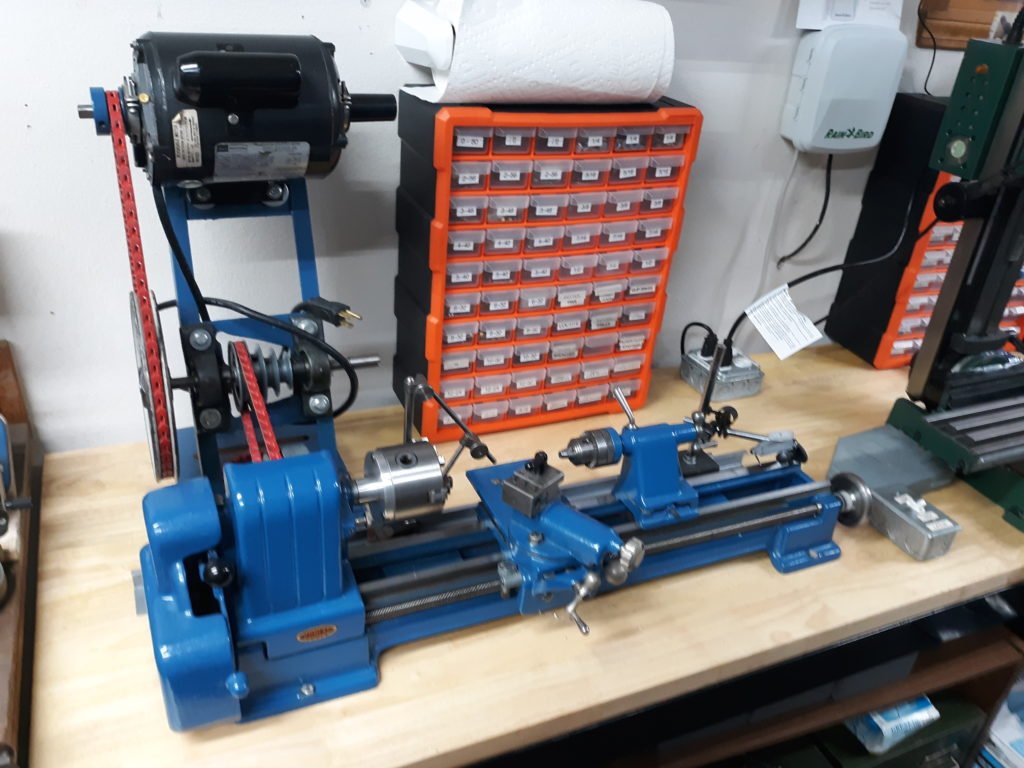
I used this lathe to produce a small engine marketed by PM Research. It consisted of a small casting and associated bar stock. Having only this small, outdated lathe and with a drill press, I machined this to its final form. Lo and behold, it worked wonderfully. I even include a short movie of the working engine among the Word Press pages.
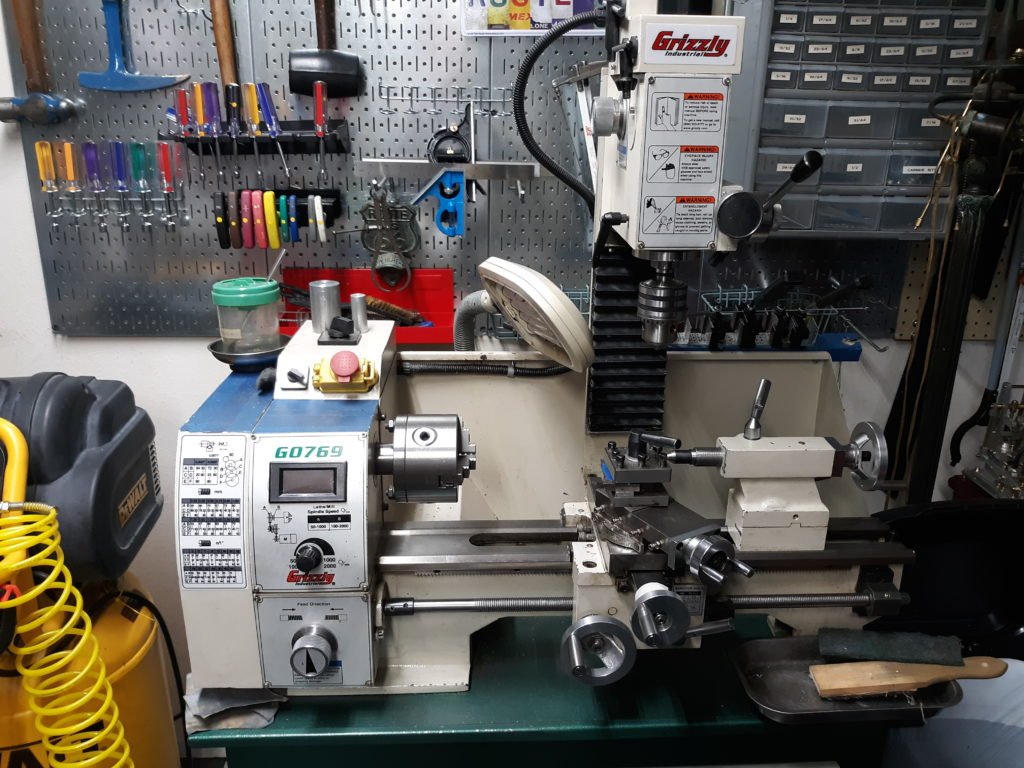
This small lathe was inherited from my father. It was dirty and covered with grease and oil. A little research showed that it was marketed by Sears in 1949 for the cost of $49.95. The reason for its bright shiny appearance today is because I have totally restored it and added a new motor and much needed tooling. However, I don’t use this lathe any longer. I graduated to a Grizzly Industrial mini-lathe and added a much needed mini-mill. I made the decision to pursue this avocation after I had retired early at the age of 56 in 1998.
I quickly discovered that the Internet was teeming with users of similar interest. I joined several user groups and learned needed lessons from amateurs and professionals. I also discovered there are a plethora of small steam engine plans available. I choose to scratch build my machines instead of using castings prepared by others.
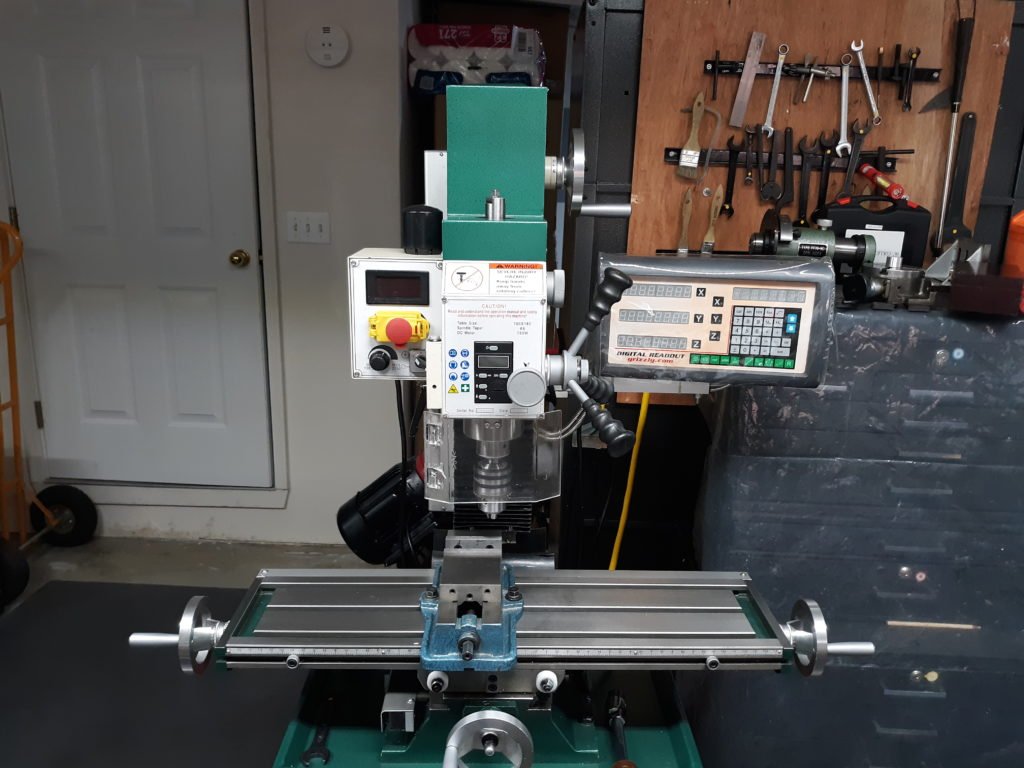
Today I have enlarged my workshop many times over. I have purchased larger lathes and milling machines, again from Grizzly, my favorite machine shop. I’ve also added other machines such as metal cutting band saws and grinders. I continue to rely heavily on Grizzly since their machines are reliable and accurate for my purposes, and their cost is not prohibitive.
Attached below are pictures of my current lathe and milling machine.
This is an update as of November 20, 2022.
====================================================================
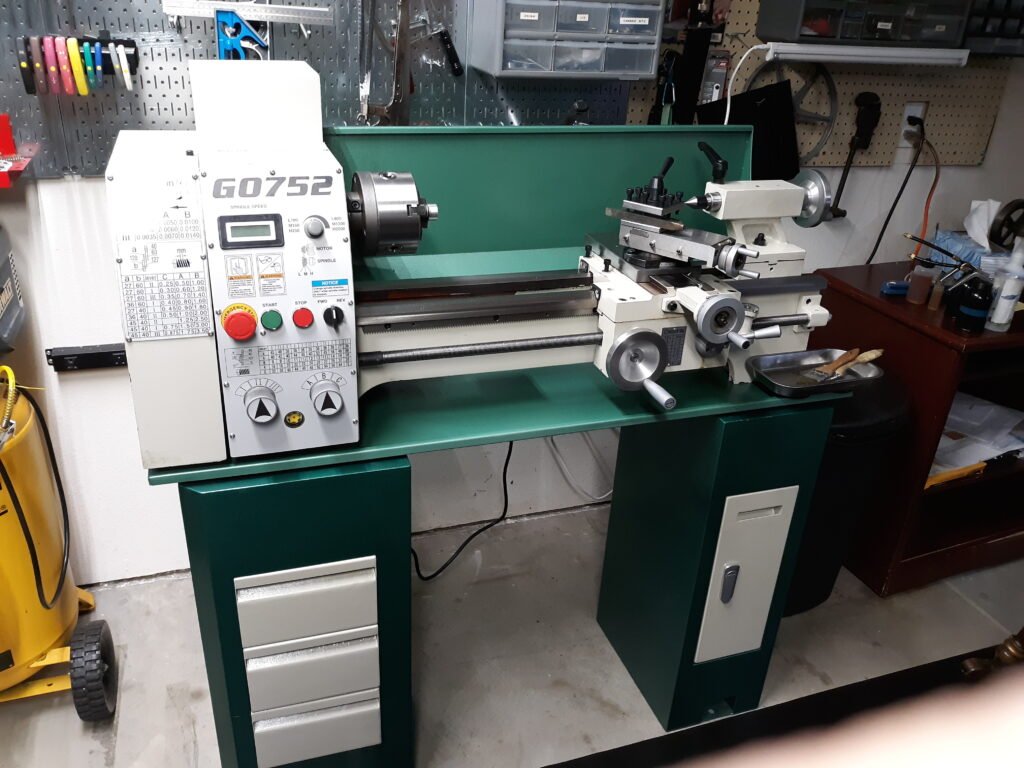
My Grizzly Industrial G0769 has started giving me problems. Therefore, I have decided to arm myself with a newer, bigger lathe …. the G0752. I choose this lathe because it is a lathe only (no vertical drill attachment). Also it has a VFD. The VFD takes single phase 110 volts and convers it to three phase 220 volts. This provides me with more torque at lower RPM and additionally provides variable speeds.
The lathe has a swing of 10 inches and is 22 inches between centers. This allows me the opportunity of working on larger projects. Althrough this is still considered a “hobby” lathe category, It enlarges my work area to fit the sizes of builds I typically work.
I look forward to utilizing making threads on this machine. I will continue to utilize screws, nuts and washers for normal applications but larger threads of metric and US sizes are easymade easily.